
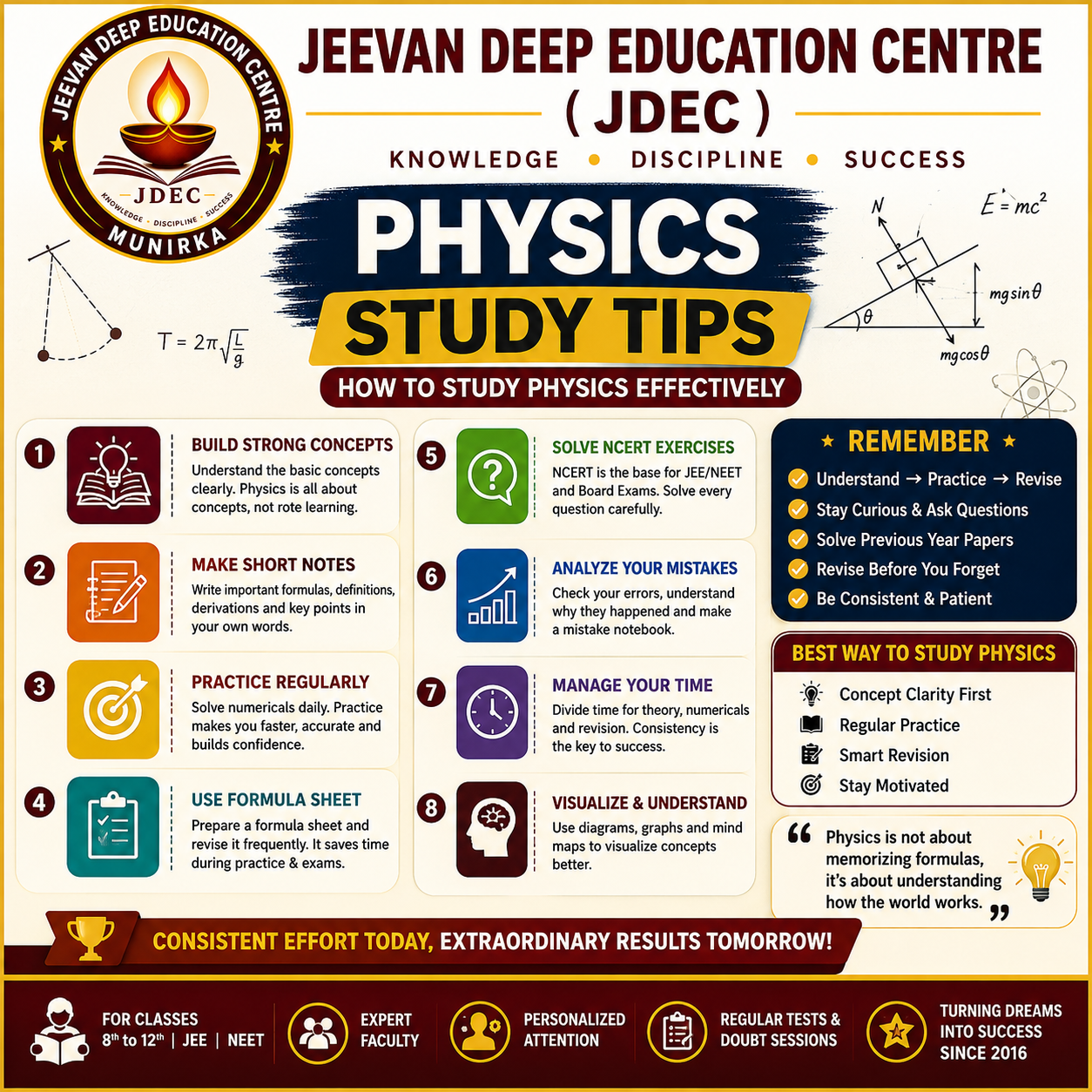
Physics Study Tips: A Complete Guide for Better Learning
Physics is one of the most interesting subjects because it helps us understand how the world around us works. However, many students find Physics difficult because it involves concepts, formulas, diagrams, and numerical problems. With the right study strategy and regular practice, Physics can become much easier and more enjoyable.
1. Focus on Understanding Concepts
Do not try to memorize everything. First, understand the basic concept behind each topic. Ask yourself why a particular formula works and how it is used in real-life situations.
2. Learn Formulas Properly
Instead of simply memorizing formulas, understand the meaning of every symbol and the units involved. Maintain a separate formula notebook for quick revision.
3. Practice Numerical Problems Daily
Physics requires regular problem-solving practice. Start with easy questions and gradually move towards more challenging problems.
A good study pattern is:
Concept → Formula → Solved Example → Practice Questions → Revision
4. Draw Diagrams and Visualize Concepts
Diagrams play an important role in Physics. Practice drawing:
-
Ray diagrams
-
Electric circuits
-
Force diagrams
-
Motion graphs
-
Wave diagrams
Clear diagrams can help you understand and remember concepts more effectively.
5. Maintain a Mistake Notebook
Whenever you make a mistake in a numerical or theoretical question, write it down. Review these mistakes regularly so that you do not repeat them in future tests and examinations.
6. Practice Previous Year Questions
Previous year papers and sample papers help students understand the exam pattern, important topics, and types of questions commonly asked in examinations.
7. Revise Regularly
Regular revision is essential for remembering formulas and concepts. Try to revise important topics every week instead of waiting until the last moment.
8. Clear Your Doubts Quickly
Do not leave doubts unresolved. Ask your teacher or discuss difficult concepts as soon as possible. A strong foundation makes advanced topics easier to understand.
9. Focus on Concepts and Application
Physics is not only about learning formulas. Students should understand where and how to apply those formulas. Try solving different types of questions from the same chapter.
10. Stay Consistent
Even 45–60 minutes of focused Physics study every day can be more effective than studying for many hours only before an examination.
A Simple Physics Study Routine
-
15 minutes: Revise concepts and formulas
-
20 minutes: Study a new topic
-
30 minutes: Solve numerical problems
-
10 minutes: Review mistakes and difficult questions
Final Thoughts
Success in Physics comes from a combination of strong concepts, regular practice, problem-solving skills, and consistent revision. Do not be afraid of difficult questions. Every problem you solve improves your understanding and confidence.
Remember: